
Most businesses have tried a chatbot. Usually it was the kind that offered three buttons, misunderstood the fourth question and then asked if you wanted to speak to an agent. Fair enough if that put you off.
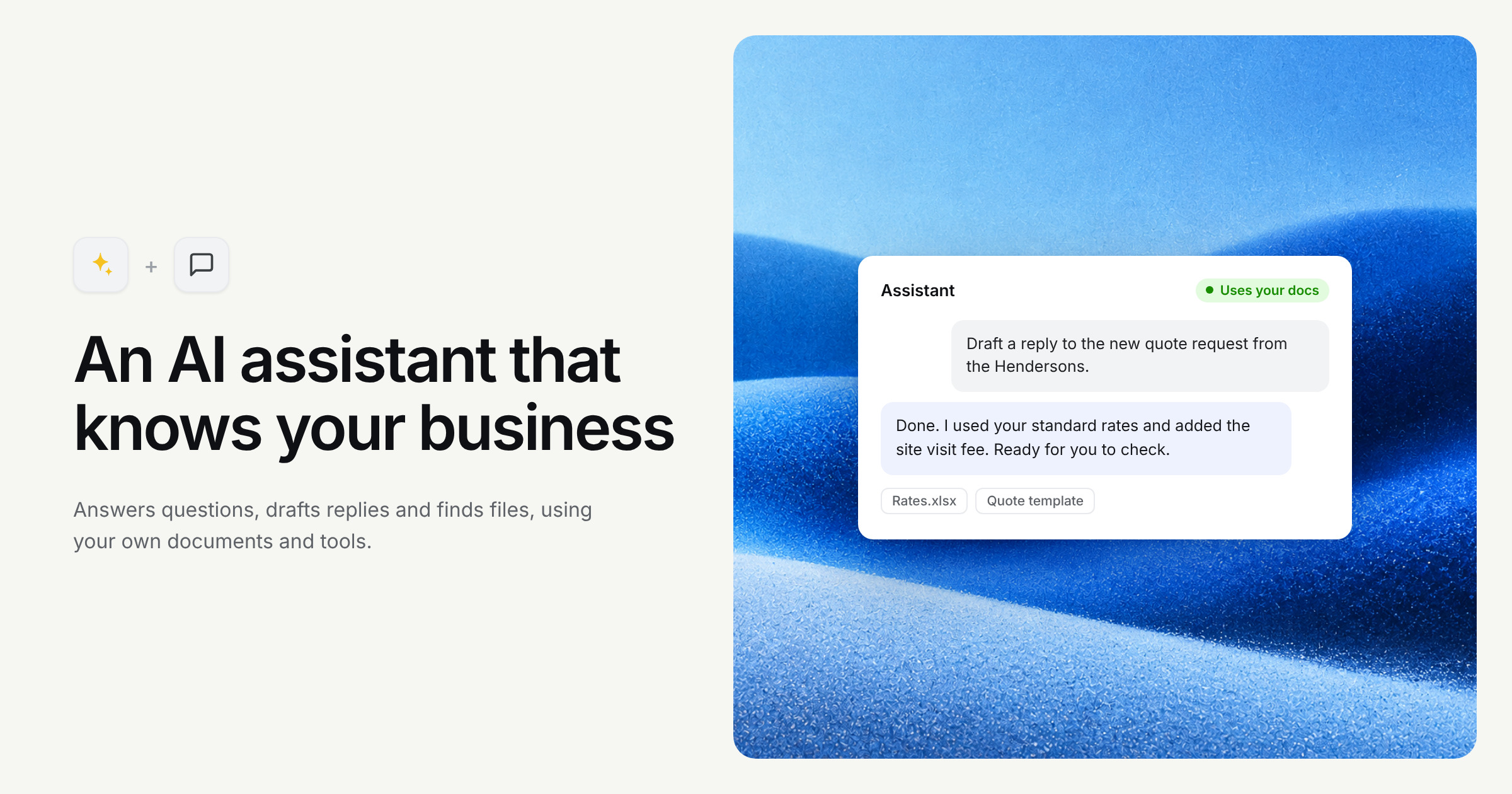
Modern AI assistants are a different animal. They understand ordinary language, they can be given your products, prices and processes, and they can actually do things: check a booking, look up an order, draft a quote.
Where AI actually fits
An assistant is useful anywhere people ask questions that have known answers, or start tasks that follow a known process. That's customer enquiries on your website, staff looking things up internally, or a first draft of a reply that a person then sends.
The trick is deciding what it's allowed to do on its own and what it hands over. Get that boundary right and it feels like a helpful colleague. Get it wrong and it feels like a liability.
What it's great at
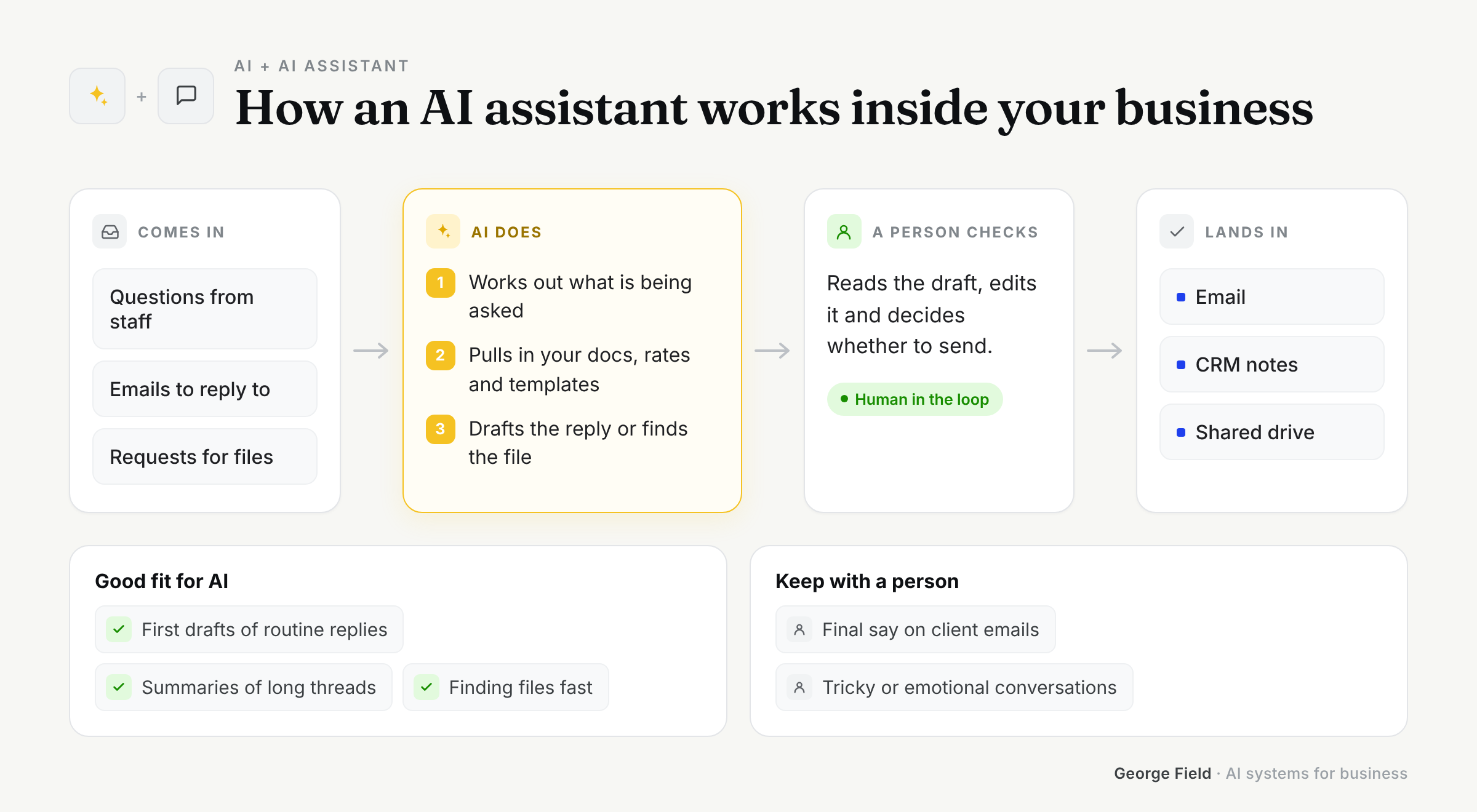
- Answering common questions instantly, at 2am, on a bank holiday
- Collecting the details a person would need before they pick up a case
- Looking things up in your systems so customers don't have to wait
- Drafting replies in your tone of voice for someone to approve
What it's not great at
- Handling angry or upset customers. People want a person, and they're right to
- Making commitments: refunds, discounts, exceptions. Keep those with your team
- Anything it hasn't been given information about. It shouldn't improvise, and it shouldn't be allowed to
- Replacing a bad process. If the process is confusing, the assistant will be confusingly polite about it
How to implement it
Pick one channel and one job. Website enquiries for a single service is a good start.
Write down the questions it should answer, the ones it should hand over, and what a good handover looks like. Then connect it to the information it needs and nothing more.
Run it with a person reviewing conversations for the first few weeks. You'll spot the gaps quickly, and fixing them early is far cheaper than an embarrassing screenshot later.
How I approach it
I build assistants on top of your own content and systems, with clear limits on what they can do alone. They hand over to a person with a summary so nobody has to start from scratch.
I'd much rather launch something small that works than something ambitious that sort of works. You can always give it more responsibility once it's earned it.
Ideas that work
- A website assistant that qualifies enquiries and books calls into your calendar
- An order-status helper that saves your team from "where's my parcel?" emails
- An internal assistant that answers "how do I…" questions about your own tools
- A reply drafter in your inbox that gets the boring 80% written before you've finished your coffee
Not sure whether an assistant would help or just add another thing to manage? Book a call and we'll work out which.
