
Construction runs on documents. Drawings, specs, tenders, method statements, site diaries, variations. Most of the expensive problems on a project trace back to something that was written down somewhere but didn't reach the right person in time.
AI is good with documents. That makes construction one of the more interesting places to use it, as long as you're realistic about what it's doing.
Where AI actually fits
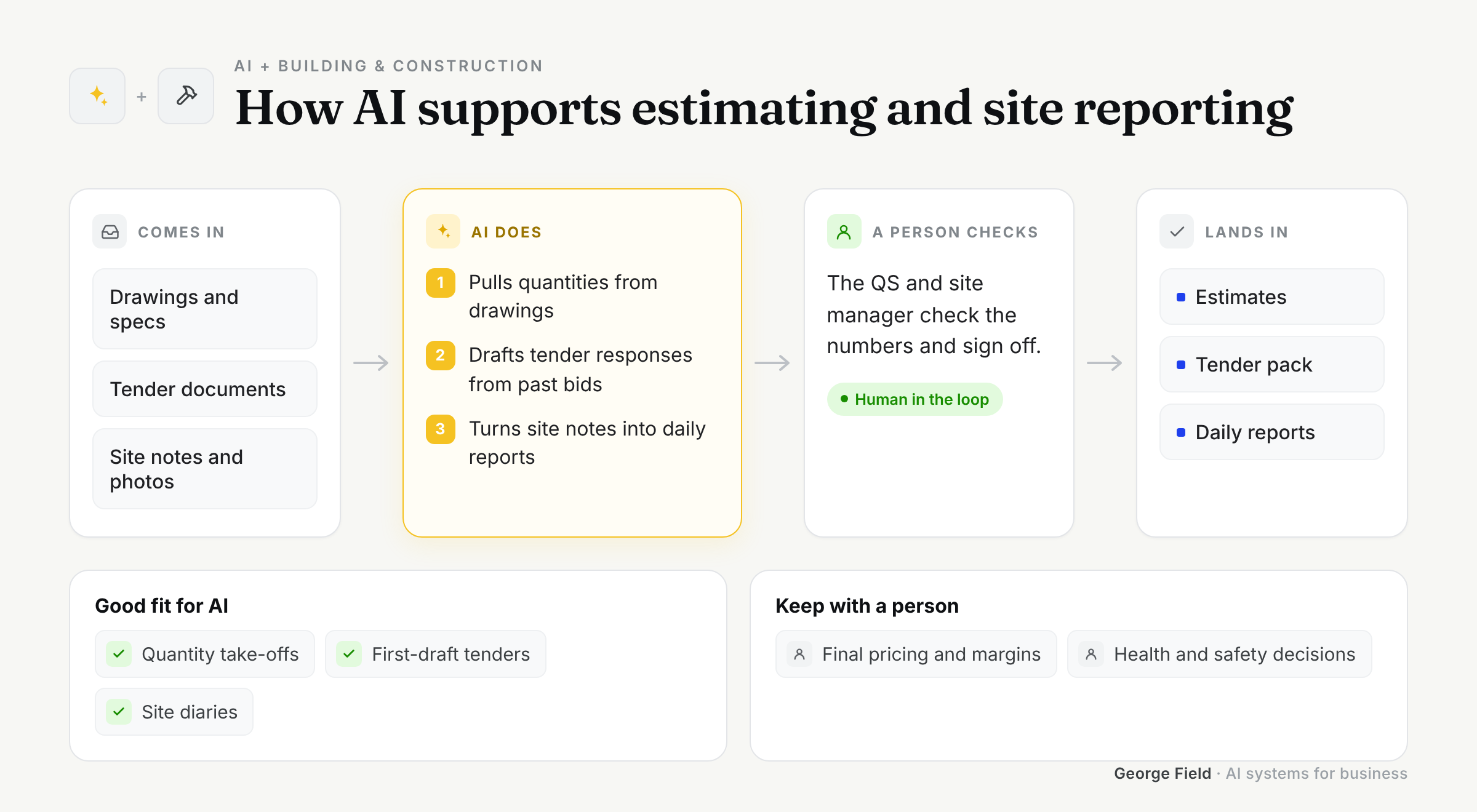
The strongest uses are in pre-construction and project admin. Pulling requirements out of tender documents, drafting responses from your past bids, building first-draft estimates from specs and previous jobs, and turning site notes and photos into reports.
On site, it's more about information than automation: finding the right drawing revision, the relevant spec clause, or what was agreed in last month's meeting minutes.
What it's great at
- Reading tender packs and pulling out requirements and deadlines
- Drafting tender responses from your previous bids and case studies
- Turning site notes, voice memos and photos into consistent reports
- Searching project documents for the clause, drawing or decision you need
What it's not great at
- Pricing risk. Your estimators know which jobs bite back
- Health and safety sign-off. RAMS need competent people, not autocomplete
- Reading drawings with real accuracy. It's improving, but don't trust quantities blindly
- Site judgement. Ground conditions don't care what the model thinks
How to implement it
Start with tenders if you bid a lot. Gather your past submissions and build a library the AI can draft from. Your team then edits rather than writes from scratch.
For delivery, start with reporting: site diaries and progress reports drafted from notes and photos, checked by the site manager.
In both cases, every draft is reviewed before it goes anywhere. The point is fewer blank pages, not fewer checks.
How I approach it
I've spent years connecting product, engineering and business goals, and construction projects are the same puzzle with more mud. I start by finding where the time and risk actually sit, then build the smallest useful thing.
Every draft is checked by your team before it goes anywhere.
Ideas that work
- Tender requirement extraction with a compliance checklist
- Bid response drafts built from your past submissions
- Site report and diary drafts from voice notes and photos
- A project document search that finds the latest revision first
If your team spends evenings writing tenders, Book a call and let's see what can be drafted for them.
