
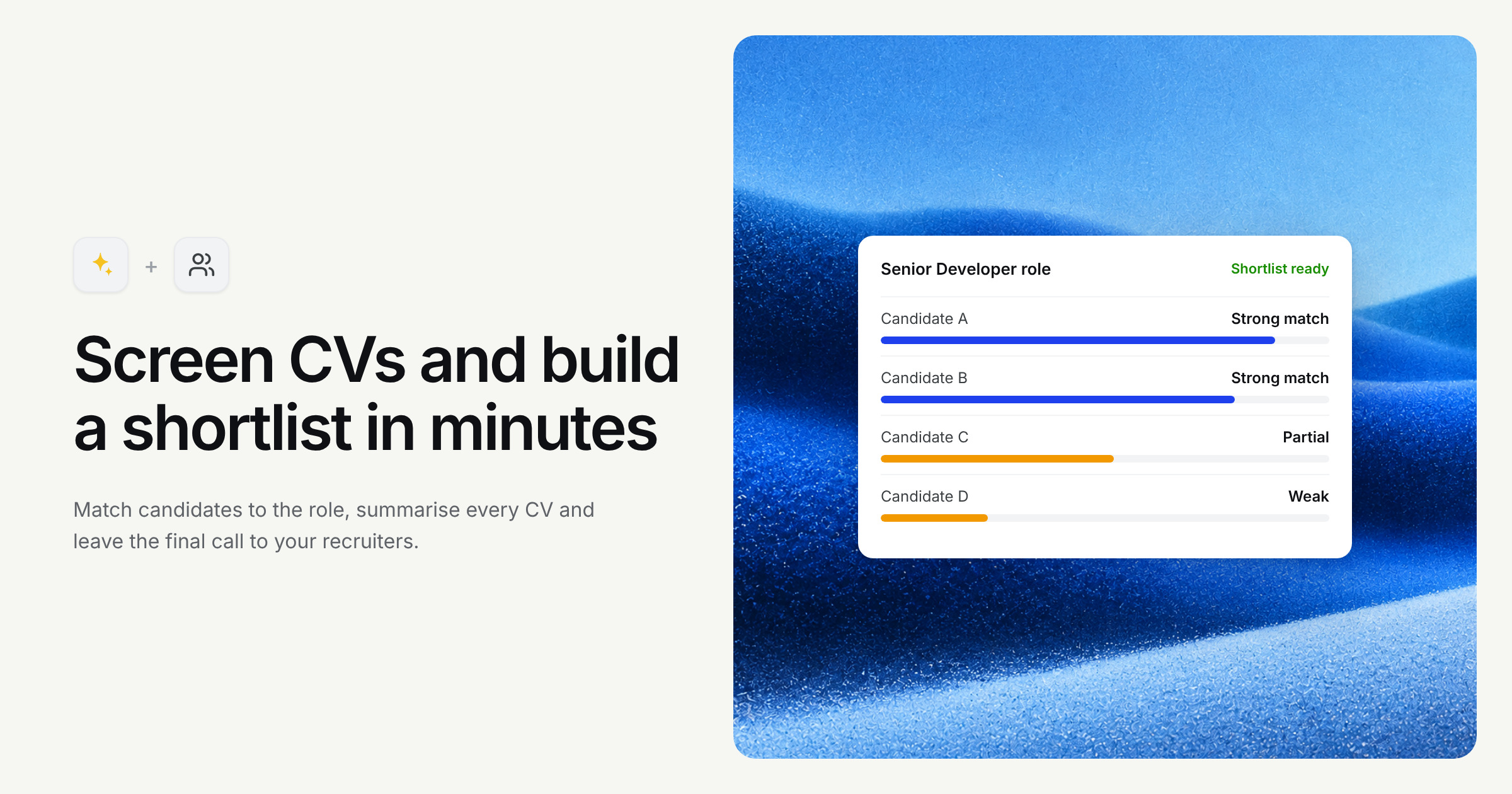
A recruiter opens a role, and two hundred CVs arrive. Maybe fifteen are worth a proper look. Finding those fifteen takes most of a day, and by the time you've read CV number 140, your judgement isn't what it was at CV number 3.
AI can do that first sift consistently. But recruitment is about people's careers, so it needs to be done carefully and transparently.
Where AI actually fits
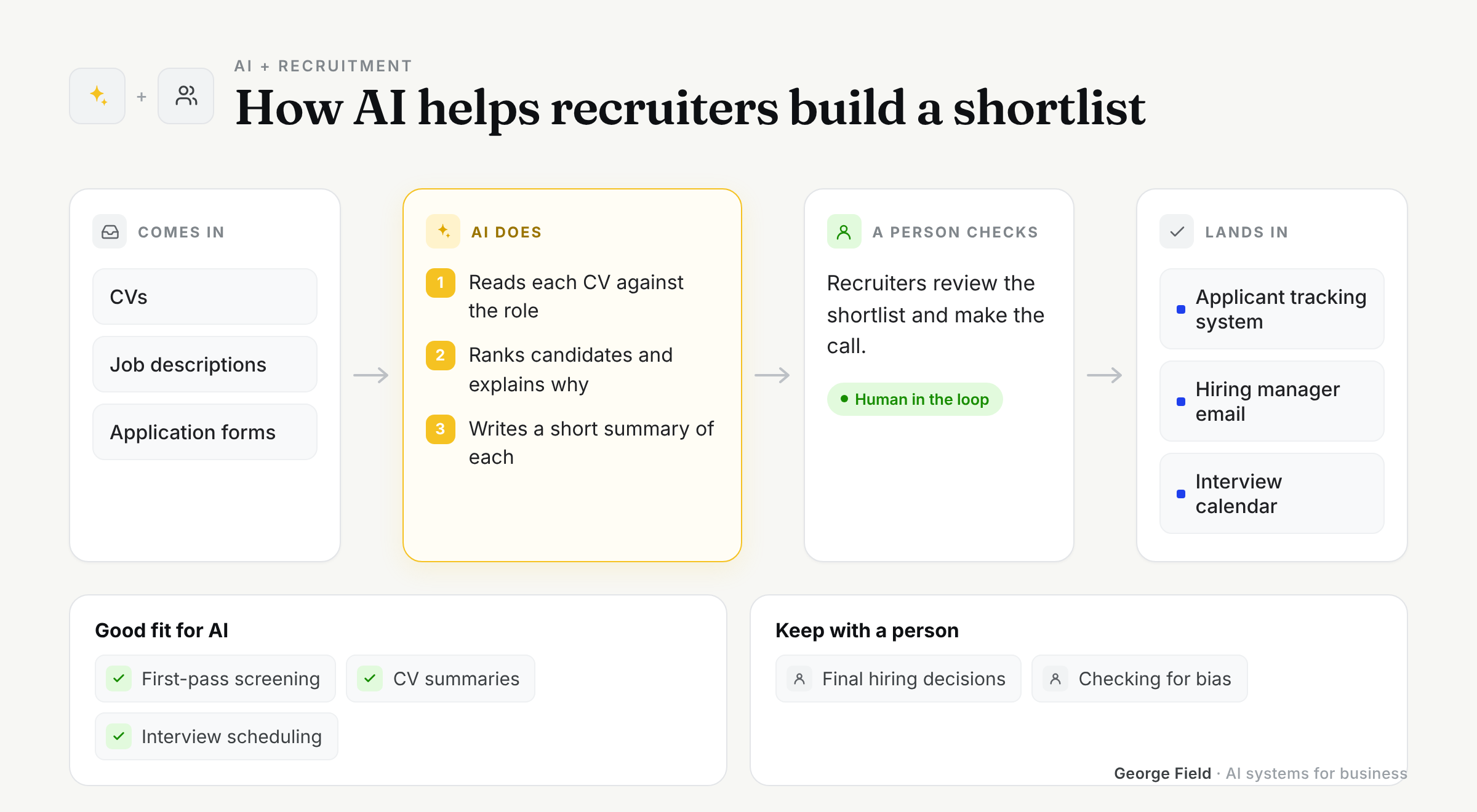
The best uses support the recruiter rather than replace them: screening CVs against the requirements of a role, matching candidates already in your database to new roles, writing up interview notes and drafting outreach.
There's a well-known story of a big tech company scrapping an AI recruiting tool after it learned to favour men, because that's what its historical hiring data looked like. That's the cautionary tale. The fix isn't to avoid AI; it's to build it so its reasoning is visible and a person makes the call.
What it's great at
- Screening CVs against clear, written requirements
- Finding good candidates already sitting in your database
- Drafting personalised outreach and follow-ups
- Summarising interview notes into a consistent format
What it's not great at
- Judging culture fit, potential or a career change story
- Being fair by default. It has to be designed and checked for bias
- Making rejection decisions alone. Candidates deserve a human decision
- Fixing a vague job spec. If you don't know what you want, neither will it
How to implement it
Start by writing down what each role genuinely requires: skills, experience, location, right to work. That list becomes the screening criteria, and it's useful even without AI.
Use AI to rank and explain, not to reject. Every recommendation should come with reasons a recruiter can read and disagree with.
Review the results regularly. Who's being surfaced, who isn't, and does that match what a good recruiter would expect?
How I approach it
Every recommendation I build comes with its reasoning, so recruiters stay in control of who moves forward. I keep people out of the decision loop only for the boring bits: parsing, matching, formatting.
Speed is nice. Fairness is non-negotiable. Ideally you get both.
Ideas that work
- CV screening with a written reason for each match score
- Re-engaging past candidates when a matching role opens up
- Interview note summaries in a consistent scorecard format
- Outreach drafts that actually reference the candidate's experience
If your team is drowning in applications, Book a call and we'll work out where AI helps and where it shouldn't go near.
