
Insurance runs on two things: documents and decisions. Claims come in with forms, photos and letters. Policies run to dozens of pages. Somebody has to read all of it before anyone can decide anything.
AI can do a lot of that reading. The decisions should stay with your people, and so should the accountability.
Where AI actually fits
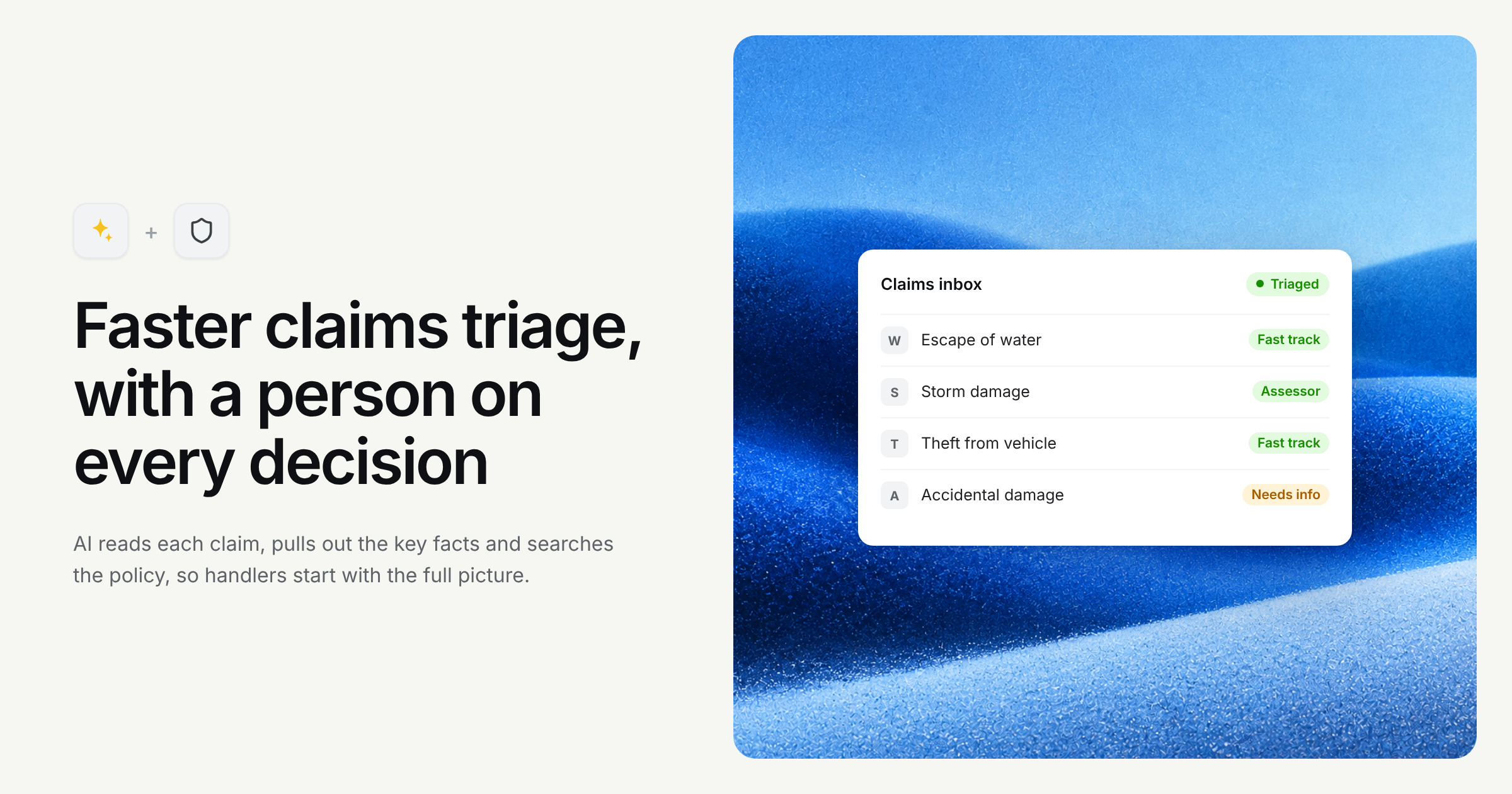
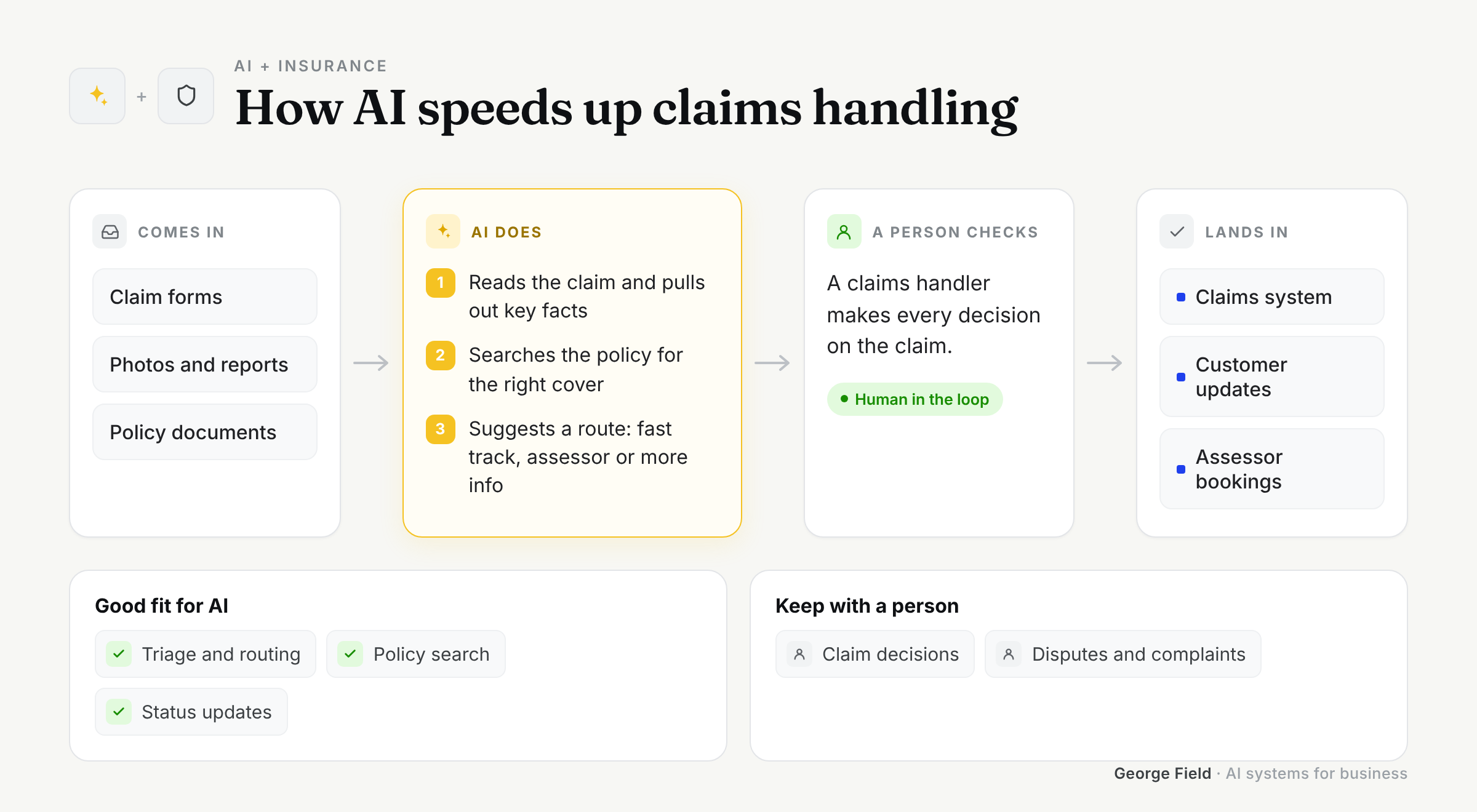
The clearest wins are in triage and search. Reading an incoming claim, pulling out the key facts, checking them against the relevant policy wording and routing the case to the right handler. Or helping a handler find the clause they need without scrolling through a 40-page PDF.
In a regulated industry where the FCA's Consumer Duty asks firms to deliver good outcomes for customers, speed matters, but so does fairness and being able to explain what happened. Any AI you use has to support both.
What it's great at
- Reading claim forms and attachments and summarising the facts
- Finding the relevant policy wording for a given situation
- Routing claims by type, complexity and urgency
- Spotting missing information early so customers aren't chased twice
What it's not great at
- Making claim decisions on its own. That's a human responsibility
- Explaining itself unless you build it to. Black boxes and regulators don't mix
- Handling vulnerable customers. They need a person, with time and care
- Inheriting bias from historical data without anyone checking
How to implement it
Start with triage and summarisation, where AI prepares the case and a handler makes the call. It's low risk, easy to measure and the benefit shows up quickly in handling times.
Build in explainability from day one: every summary and suggestion should link to its source. Keep a record of what the system suggested and what the person decided.
Bring compliance in at the start. It's much easier to design for scrutiny than to retrofit it.
How I approach it
I build systems where AI does the reading and sorting so handlers can decide faster, with every suggestion traceable back to the documents.
No hidden decisions, no clever shortcuts around the people who are accountable. That's not caution for the sake of it; it's what makes the tool usable in an industry like this.
Ideas that work
- Claims triage that summarises each case and suggests a route
- Policy wording search for handlers and customer service teams
- First notification of loss forms that ask the right follow-up questions
- Document checks that flag missing evidence before a claim stalls
If your handlers spend more time reading than deciding, Book a call and let's look at where the time goes.
