
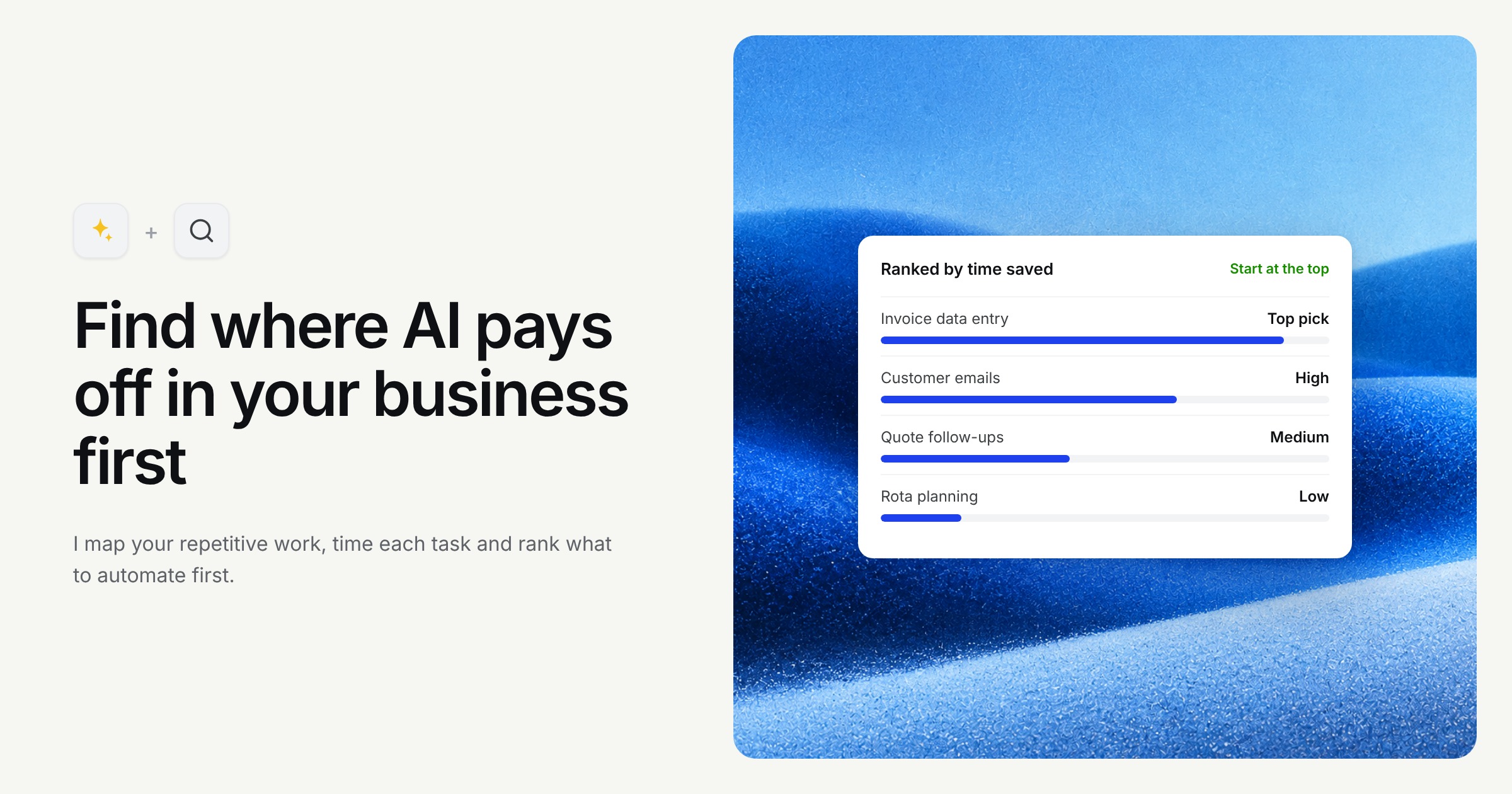
The most expensive AI project is the one that solves the wrong problem. It happens more than you'd think: someone sees a demo, gets excited and builds a chatbot, when the real time sink was three people retyping invoices.
An AI audit is how you avoid that. It's a short, structured look at where your time goes, and where AI would genuinely pay off.
Where AI actually fits
The audit sits before any building. It maps your repetitive work, puts numbers on it and ranks the opportunities by hours saved, cost and risk.
It's also where I'll tell you if AI isn't the answer. Sometimes the fix is a better template, a shared inbox rule or deleting a step. That's still a good outcome; it's just a cheaper one.
What it's great at
- Finding the work that eats the most hours across your team
- Separating the good AI opportunities from the shiny ones
- Putting realistic costs and savings against each idea
- Giving you one clear first project instead of a vague strategy
What it's not great at
- Producing results on its own. It's a plan, not a system
- Guessing. If we can't time or count something, we'll say so
- Replacing a conversation with your team. The people doing the work know where the pain is
- Being a 60-page report nobody reads. If it doesn't fit on a few pages, it's too long
How to implement it
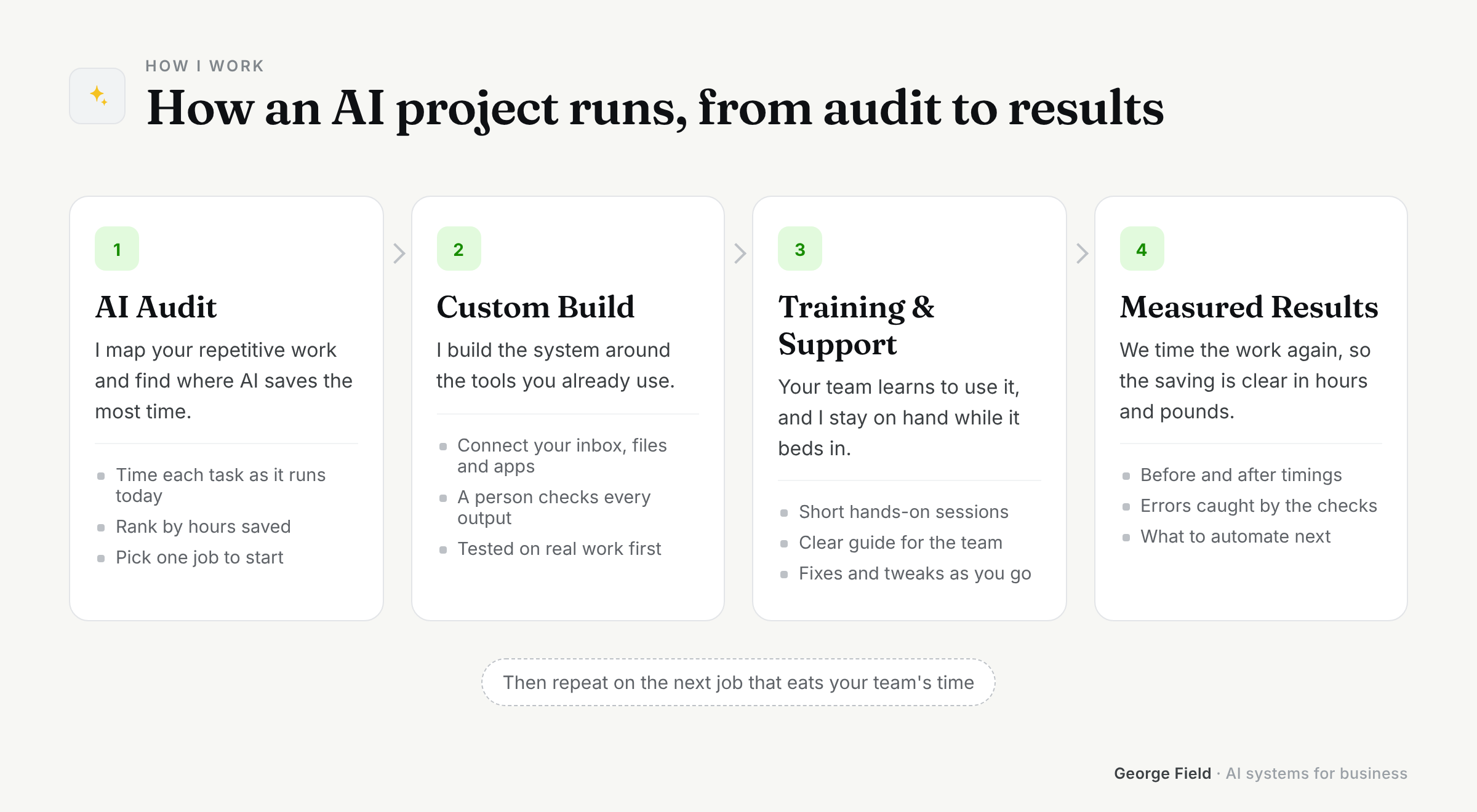
We talk to the people doing the work, look at how tasks move through your systems, and time the jobs that come up again and again.
Each opportunity gets ranked by hours saved, cost to build and run, and risk. Then we pick one job to start with, the one with the best balance of value and certainty.
You walk away with a short report, a recommended first project and honest numbers, whether or not you build it with me.
How I approach it
I treat the audit like product discovery: understand the problem before proposing a solution. It's the first step in how I run every project, and it's what keeps the later steps focused.
The aim is a decision you're confident in, not a sales pitch for a big build.
Ideas that work
- A time-and-frequency map of your team's repetitive work
- A ranked list of automation opportunities with rough costs and savings
- Clear notes on what should stay with people, and why
- A recommended first project with a simple plan to measure success
If you know you should be using AI but aren't sure where, Book a call. That's exactly what the audit is for.
