
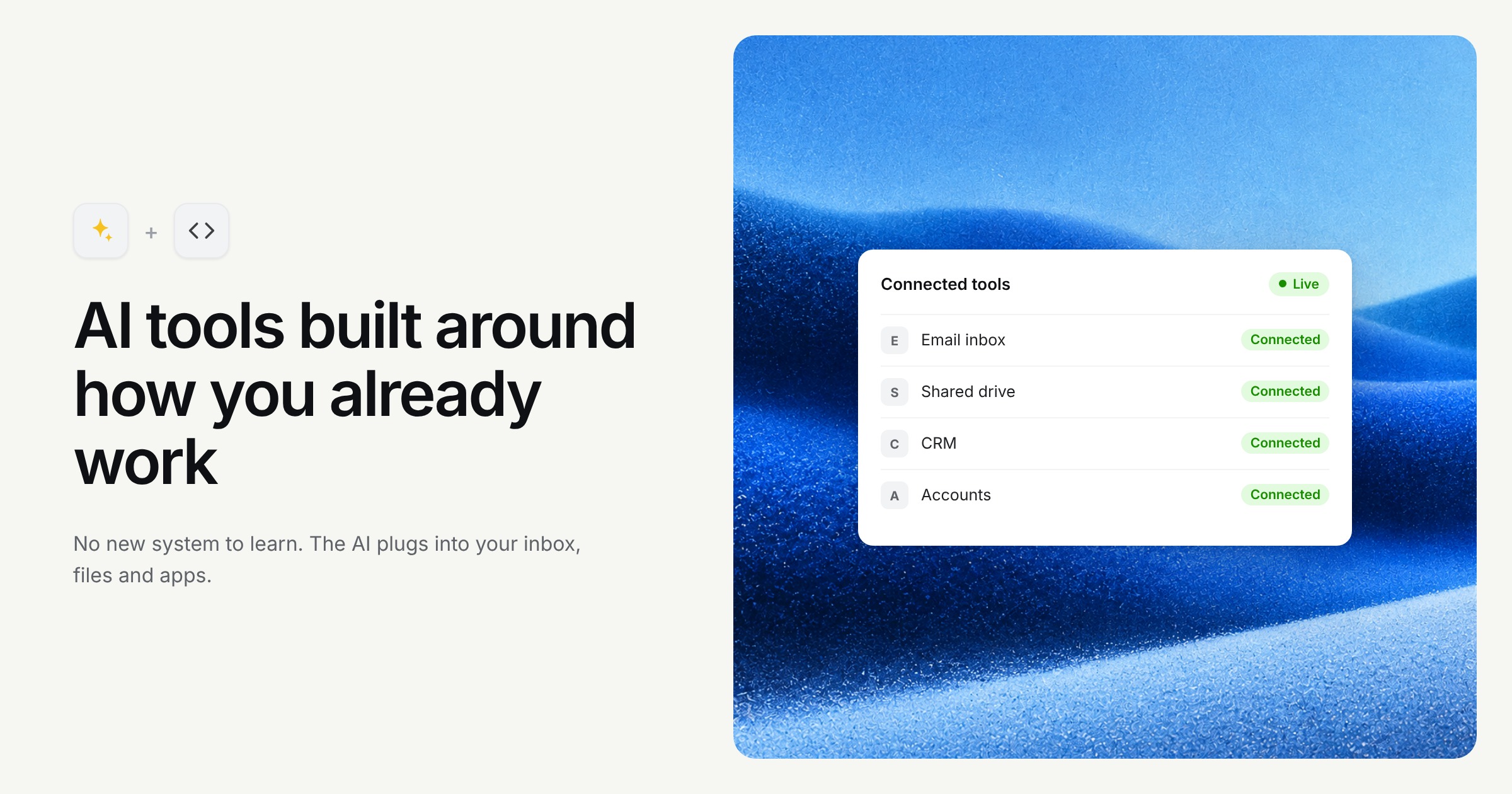
Off-the-shelf AI tools are great until they meet your actual business. Then you discover they don't connect to your systems, don't understand your process, and want you to change how you work to suit them.
A custom build goes the other way. It fits around the tools and processes you already have.
Where AI actually fits
Custom doesn't have to mean big. Most of what I build is focused: one job, done well, connected to the inbox, files and apps your team already uses. Document pipelines, assistants, workflow automations, and the integrations that tie them together.
I've built production AI systems in Python and TypeScript, from document pipelines that handled thousands of files to agentic flows that call tools and services to finish multi-step tasks. The tech is the easy part to talk about. Fitting it to your business is where the value is.
What it's great at
- Connecting AI to the systems and data you already use
- Matching your real process instead of a generic one
- Keeping a person in the loop exactly where you need one
- Growing in small steps as each part proves itself
What it's not great at
- Being the right answer when an off-the-shelf tool already does the job. I'll tell you if it does
- Being finished. Software needs looking after, and so does anything built on AI models
- Delivering value without clear goals. "Make it smarter" isn't a spec
- Being cheap to build badly. Cutting corners now usually costs more later
How to implement it
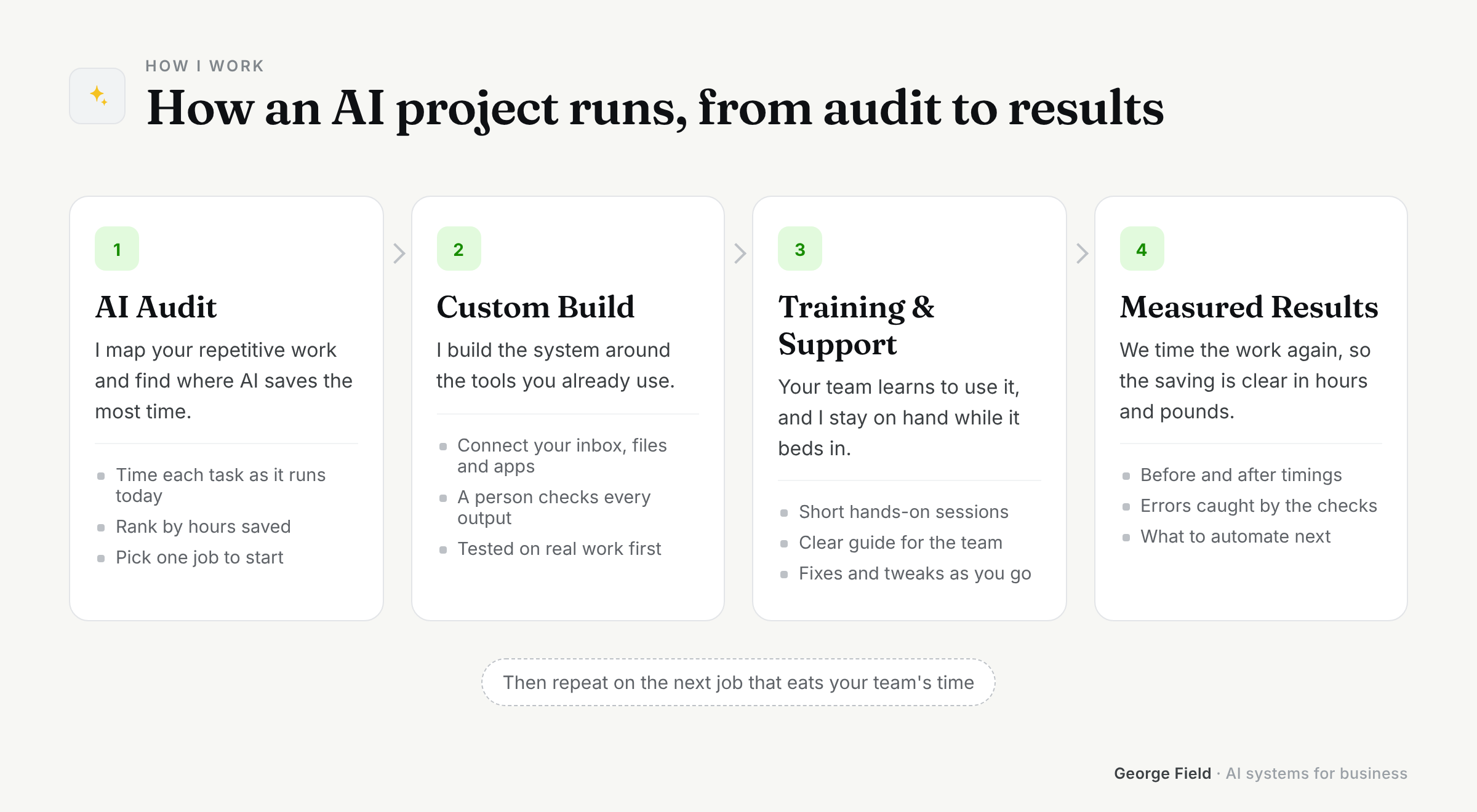
Start from the audit, or at least a clear problem: one job, with a known input, a known output and a way to tell if it's working.
I build a working version early and test it on real work, not demo data. You see results within weeks, and we adjust based on what actually happens.
Once it's reliable, we harden it: monitoring, error handling, documentation, and a clear plan for maintenance.
How I approach it
I build the way I'd want it built if it were my own business: small, tested, observable and easy to change. Every output gets checked by a person until it's earned more trust.
We'd rather fix it now than deal with it later, so the boring parts (logging, permissions, error handling) go in from the start.
Ideas that work
- A document pipeline that feeds your accounts or case management system
- An internal assistant built on your own knowledge and tools
- Workflow automations that connect apps that were never meant to talk
- A customer-facing assistant with clear handovers to your team
Got a job that no off-the-shelf tool quite fits? Book a call and let's look at it properly.
