
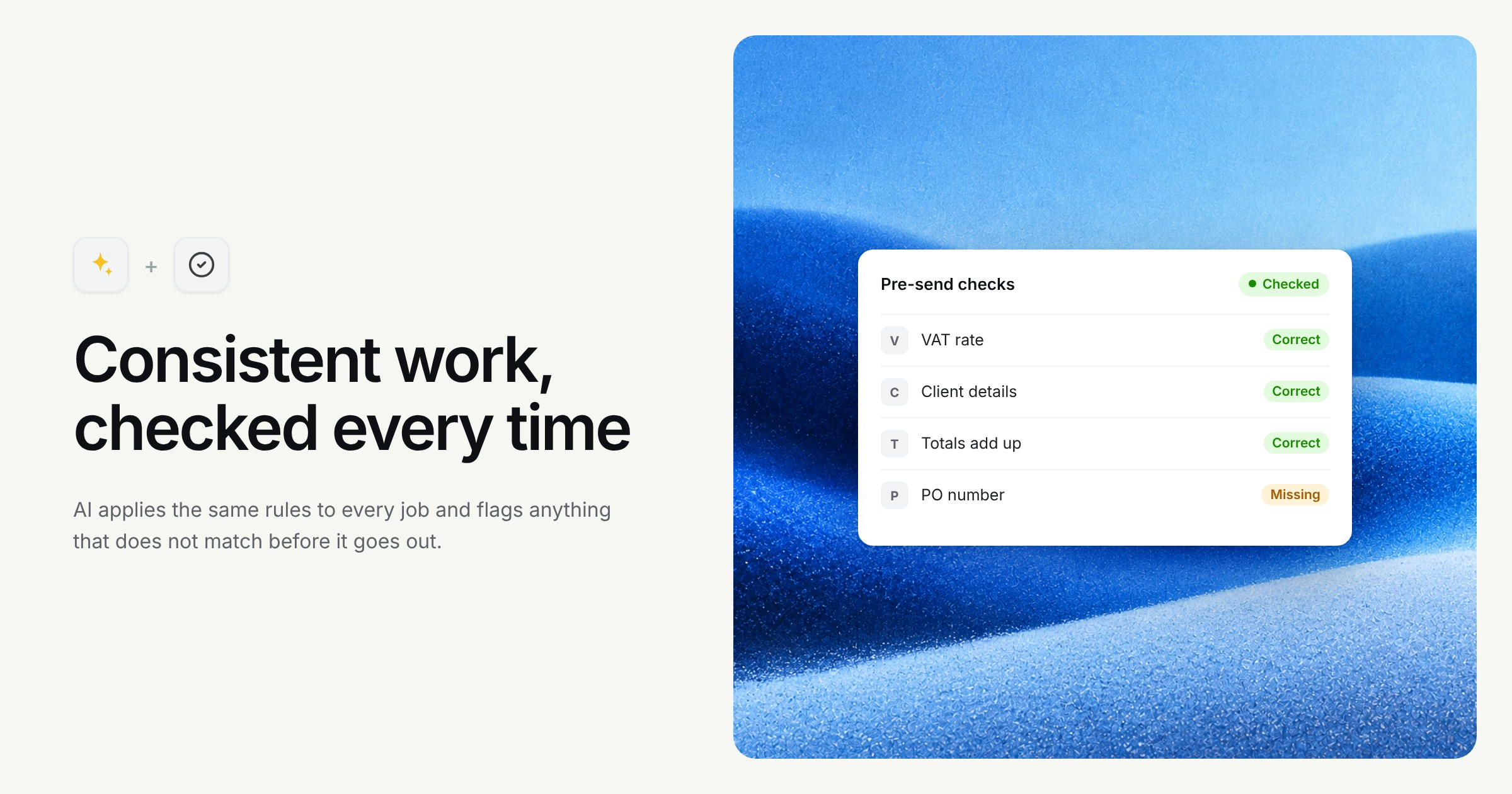
Nobody makes mistakes on purpose. They make them at 4:45pm on a Friday, on the hundredth invoice of the day, when two systems disagree about a customer's address. Repetitive work wears down attention, and errors follow.
AI doesn't get tired. That makes it very good at the boring, careful checking that people find hardest to sustain.
Where AI actually fits
Most errors in a business come from the same few places: retyping data, missing information, inconsistent processes and things that were supposed to be checked but weren't. AI can help with all of them.
At CUB3 I built AI-powered auditing that checked data and flagged problems automatically. The lesson that stuck: the most valuable output is often a simple "this looks wrong, have a look".
What it's great at
- Checking documents and data against rules, consistently, every time
- Spotting missing fields, mismatches and duplicates
- Removing retyping, which removes a whole category of typos
- Flagging unusual cases for a person instead of letting them slip through
What it's not great at
- Being perfect. It makes mistakes too, just different ones, so it needs checks of its own
- Catching errors in judgement. It can check the numbers add up, not that the decision was wise
- Knowing your rules without being told. Unwritten rules stay unchecked
- Fixing bad source data. It can flag it, but someone has to sort it out
How to implement it
List the errors that actually cost you: wrong invoices, missed details, compliance slips. Rank them by how often they happen and what they cost.
Pick one and write down the rules a careful person would check. That list becomes the system's checklist.
Run the checks alongside your current process first. Compare what the system flags with what people catch. Once it's reliably catching more, let it take the first pass.
How I approach it
I design systems that check themselves. Every automated step has a validation, low-confidence results get flagged, and a person reviews the exceptions.
Fewer errors isn't about removing humans. It's about pointing their attention where it's actually needed.
Ideas that work
- Invoice checks against purchase orders and contracts
- Form validation that catches missing information before it causes delays
- Data quality checks across your CRM and finance systems
- Pre-submission reviews of documents against a checklist
If the same mistakes keep costing you, Book a call and let's find where they start.
