
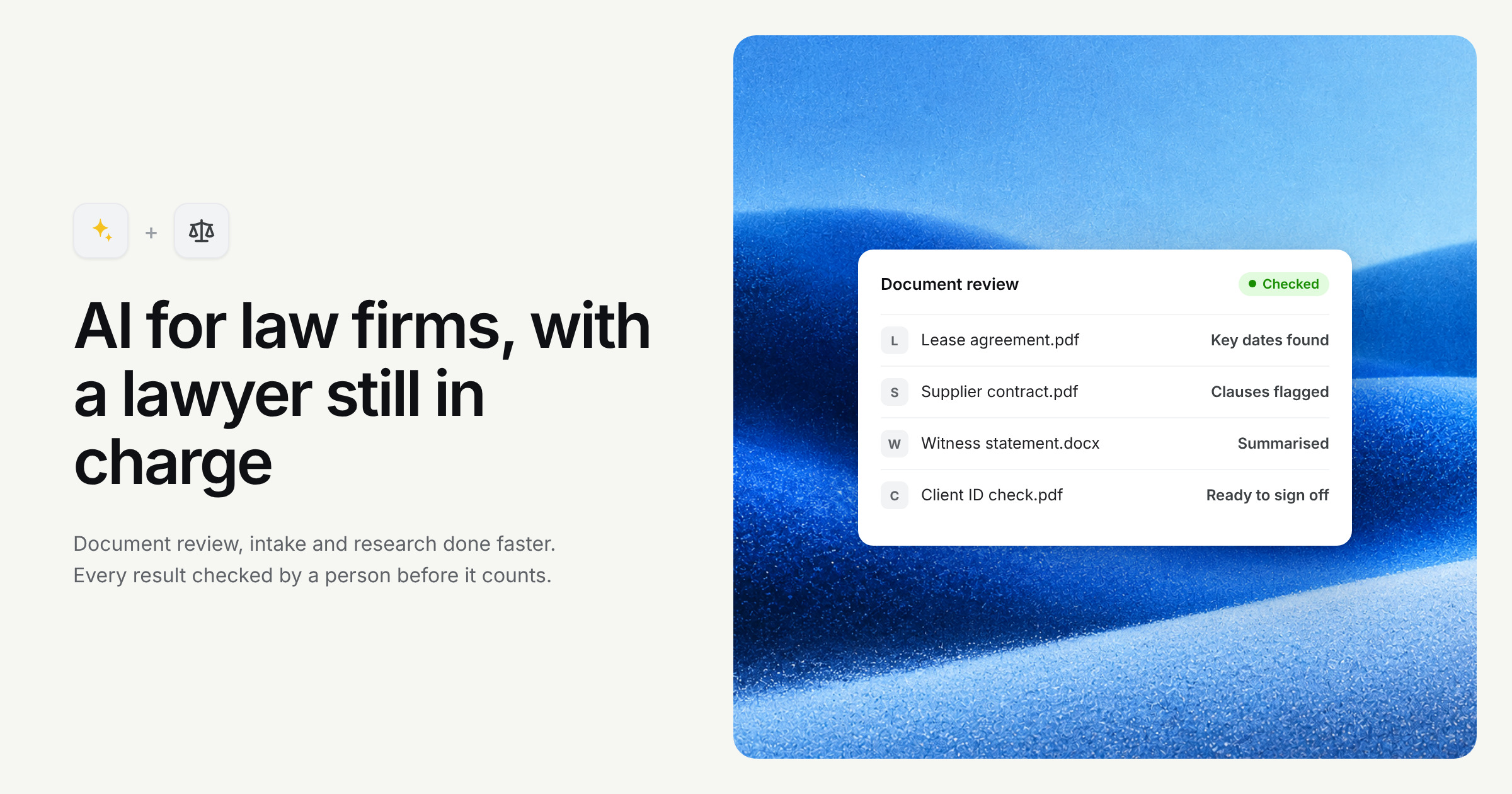
Lawyers read for a living. Bundles, contracts, correspondence, precedents. A lot of that reading is essential. A fair chunk of it is looking for the needle so the expensive part of the brain can get to work on it.
That's where AI earns its keep in a law firm: taking on the first pass, so qualified people spend their time on judgement, advice and the bits clients actually value.
Where AI actually fits
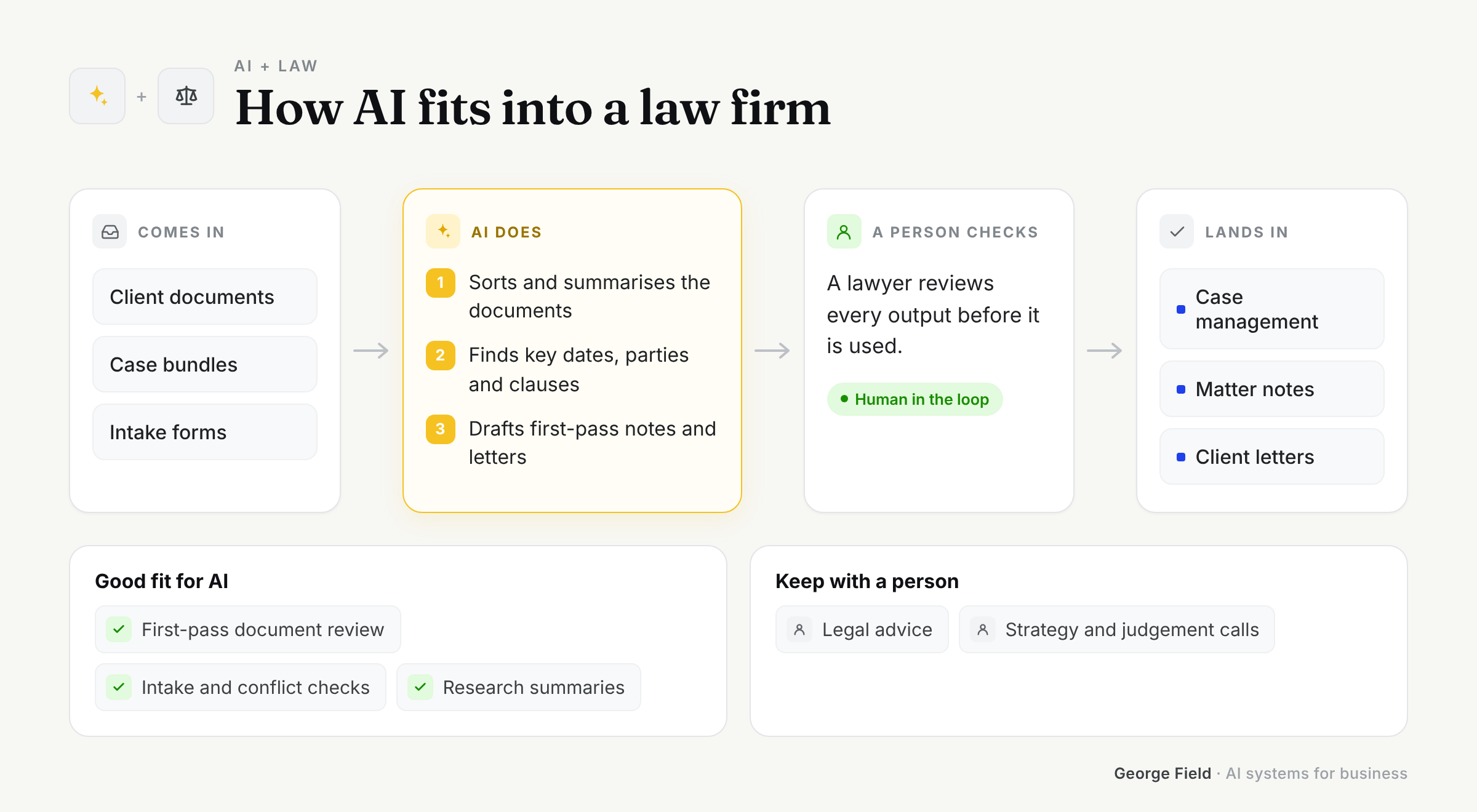
The strongest uses are around documents. Reviewing contracts for specific clauses, summarising long bundles, pulling key dates and parties, searching across your own precedents and past matters. Client intake is another good fit: collecting the facts before a fee earner gets involved.
You've probably seen the headlines about lawyers in the US and UK getting into trouble for citing cases that didn't exist, because a chatbot made them up. That's not an argument against AI. It's an argument for using it properly.
What it's great at
- First-pass review of contracts and documents against a checklist
- Summarising long bundles and correspondence into something skimmable
- Searching your own knowledge: precedents, templates, past advice
- Structured intake that gathers facts and documents before the first meeting
What it's not great at
- Legal research without verification. General chatbots can and do invent authorities
- Giving advice. It can draft; a lawyer has to own what goes out
- Handling privileged material carelessly. Where data goes matters a great deal
- Nuance in negotiations and client relationships
How to implement it
Start with an internal, low-risk use where the output is always reviewed by a lawyer, such as contract review against your own playbook or summarising disclosure.
Be strict about data from the start. Know where documents are processed and stored, make sure client data isn't used to train anyone's model, and involve whoever owns risk and compliance early rather than at the end.
Then measure time saved per matter. If a first-pass review drops from hours to minutes and the lawyer's check stays thorough, you've got a business case.
How I approach it
Every result I build for legal work cites where it came from, so it can be checked in seconds. AI does the reading and sorting; a lawyer signs off on everything that matters.
I also keep things inside systems you control wherever possible. Confidentiality isn't a feature you bolt on afterwards.
Ideas that work
- Contract review against your firm's own playbook, with flagged clauses linked to the text
- Bundle summaries with a chronology of key events and documents
- An internal assistant that searches your precedents and know-how
- Client intake forms that collect facts and documents before a fee earner picks it up
If you're curious but cautious (which, frankly, is the right instinct), Book a call and we'll find a safe place to start.
